
People with learning disabilities are often left out of the conversation about death and dying. Grief can be tough, and if someone you care about has a learning disability, you might feel tempted to try and protect them from the realities of death, and what it feels like to lose someone. But keeping this big part of life from someone with a learning disability can lead to mental health challenges further down the line, when people aren’t given the chance to process why someone’s not around anymore, or what’s happening to them. We believe everyone should have the chance to say what they want to happen when they die, and to understand what it means for life to come to an end.
In support of National Grief Awareness Week 2025, which runs from Tuesday, December 2nd to Monday, December 8th we’re talking about how we can be there for a person with a learning disability, when they have lost someone important in their life.
How to tell a person with a learning disability that a loved one has died?
- Use clear, simple language and familiar words they know, for example “has died” or “is dead”
- Avoid jargon, long words or words that have a double meaning might be hard to understand and cause more confusion, for example don’t say “we’ve lost them” or “they’ve gone away”
- Be prepared to use different communication tools such as pictures, drawings, sign language, books or video
- Follow the lead of the person you’re communicating with, answer any questions honestly
- Go at the pace of the person you’re communicating with, check they have understood and be creative if they haven’t
- It’s common for people to ask more than once about the death of someone they know. Try to answer every time, even when it is hard or you think they know and understand
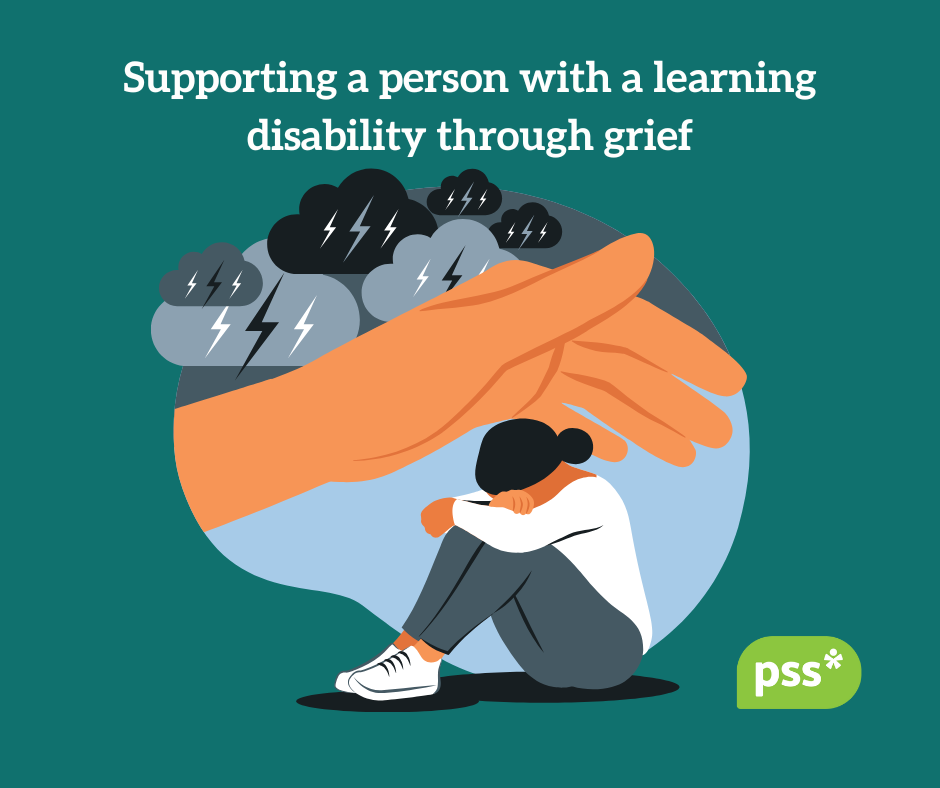
What can you do to help during this time?
Some people with a learning disability may be non-verbal, and, instead of using spoken words, may show their grief in physical or behavioural ways. They may become withdrawn or stop looking after themselves. These can be signs of grief. It’s really important to communicate with the person in a way that they can understand and be heard. This might be through easy-read books, arts and crafts, sign language or Makaton, for example.
Some ways you can offer support to someone with a learning disability who is grieving:
-
- Sharing fears and anxieties
-
- Go to support groups together
-
- Try counselling
-
- Get spiritual support, where appropriate
-
- Use art and craft and multi-sensory tools to help process emotions
-
- Visit important places
Rituals can also help someone understand that someone has died. These could include: Funerals and rites of passage
-
- Lighting candles on certain days
-
- Planting a seed in memory
-
- Celebrating the memory of a loved one, maybe by creating a memory book
-
- Allow a grieving person to offer or accept forgiveness, to provide a sense of closure
Helpful resources
Books Beyond Words – A series of picture led, easy-read books designed for people with learning disabilities to explore difficult subjects like death and bereavement. Titles include ‘When Somebody Dies’, ‘When Mum Died’ and ‘Am I Going to Die?’ You can find more information here.
Easy Read Guides – Many charities, such as Mencap and Marie Curie have information on grief and loss in easy-read formats, using simple language and pictures to help make understanding easier. You can find resources at Mencap here and this Marie Curie guide talks about supporting an adult with a learning disability when someone they know is dying or has died. Marie Curie also has many other resources in this subject, including how to help people with a learning disability plan for their end of life here.
National Grief Awareness Week is an initiative set up by the Good Grief Trust. You can find out more about them here.